

Global Electric Bicycle Market Set to Hit USD 7.2 Billion by 2036 as Urban Mobility Undergoes a Green Revolution
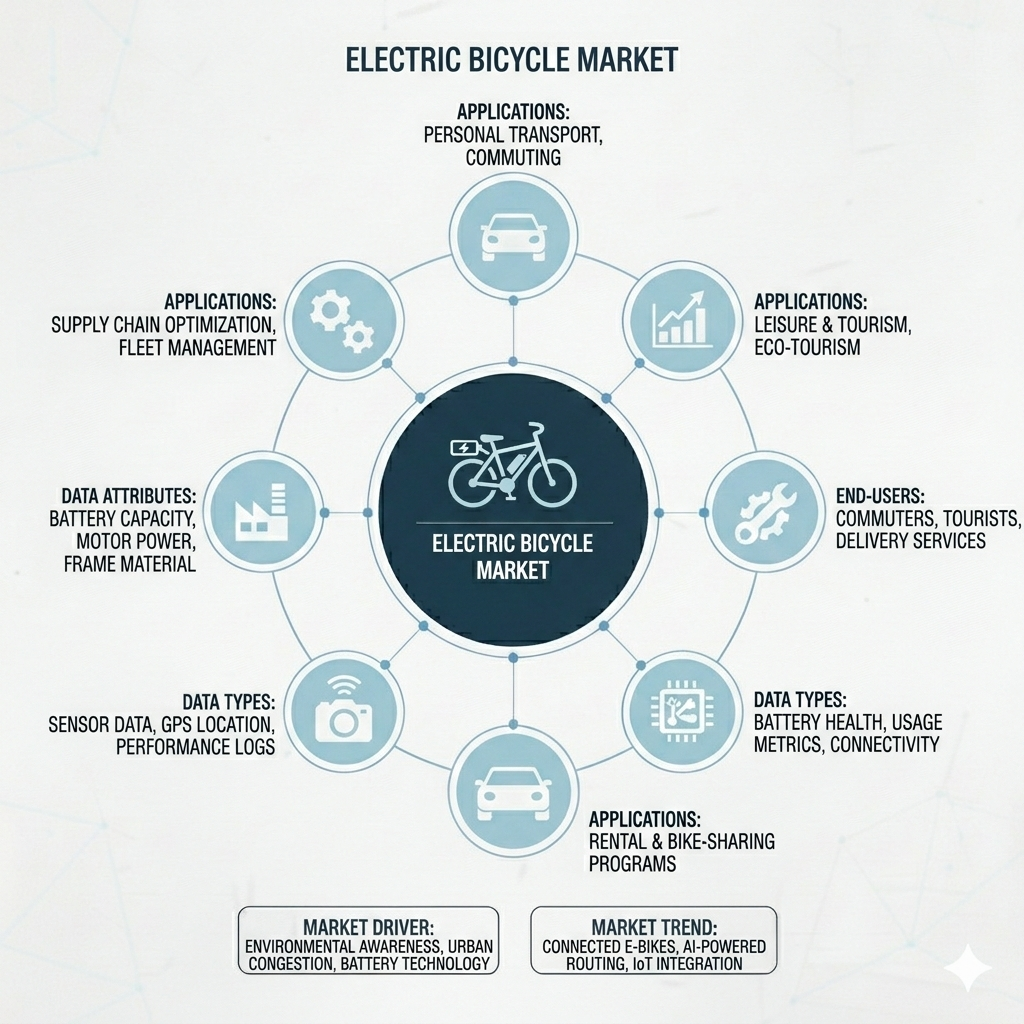
Electric Bicycle Market
The electric bicycle market is projected to grow from USD 4.4 billion in 2026 to USD 7.2 billion by 2036, at a CAGR of 5.0%.
NEWARK, DE, UNITED STATES, February 27, 2026 /EINPresswire.com/ -- The global landscape of urban transportation is undergoing a seismic shift. According to the latest comprehensive industry analysis, the global Electric Bicycle (e-bike) Market is valued at USD 4.4 billion in 2026 and is on a clear trajectory to reach USD 7.2 billion by 2036. Registering a steady CAGR of 5%, the market reflects a fundamental transition in consumer behavior toward eco-friendly, sustainable, and cost-effective mobility.
As cities worldwide grapple with rising fuel costs, traffic congestion, and stringent carbon emission mandates, the electric bicycle has emerged as the definitive "last-mile" and commuter solution.
The Power of Lithium: Why Battery Tech is the Market Engine
The e-bike market's evolution is intrinsically linked to advancements in energy storage. Li-ion batteries currently lead the sector with a dominant 40.60% market share.
Unlike legacy lead-acid versions, modern Lithium-ion systems offer superior energy density, faster charging cycles, and a significantly lighter profile. This technological leap has extended the range of e-bikes, making them viable not just for short city hops, but for longer suburban commutes. Consequently, manufacturers are doubling down on R&D to further reduce battery weight while increasing the "miles-per-charge" ratio.
Get Access of Report Sample:
https://www.futuremarketinsights.com/reports/sample/rep-gb-19578
The Ease of the Throttle: Dominating User Preference
When it comes to operation, Throttle Assist technology is the preferred choice for a majority of global consumers, accounting for 60.40% of the market. While "Pedal Assist" remains popular for fitness enthusiasts, the throttle mechanism—which allows riders to power the bike with a button or twist-grip—appeals to the high-growth urban commuter segment. This "effortless" ride is a key driver for adoption among older populations and professionals who wish to reach their destinations without the physical exertion associated with traditional cycling.
Regional Powerhouses: Asia Pacific at the Forefront
While adoption is rising globally, the Asia Pacific region remains the primary growth engine.
• Japan (5.3% CAGR): Leads the global growth rankings. The combination of an aging population seeking low-strain transport and a national culture of sustainability has made Japan a mature yet high-velocity market.
• USA (5.2% CAGR): Seeing a surge in interest as major cities like New York, San Francisco, and Austin invest heavily in cycling infrastructure and "green lanes," moving e-bikes from recreational toys to essential transport.
• China & India (5.1% CAGR): In these high-density markets, e-bikes are being positioned as the affordable alternative to cars and scooters. Government subsidies and the sheer scale of urbanization are driving massive volume growth.
• Germany (5% CAGR): Europe’s engineering hub continues to lead in premium e-bike innovation, supported by a robust cycling culture and a focus on high-performance motor systems.
Investment Dynamics: Capital Intensity Meets Innovation
The next decade of the e-bike market will be defined by capital intensity. Manufacturing high-performance e-bikes requires significant upfront investment in battery production and advanced motor synchronization.
"The investment landscape is shifting from general manufacturing to high-tech selectivity," says a lead industry consultant. "We are seeing a concentration of capital toward firms that demonstrate 'Smart Connectivity'—integrating GPS tracking, anti-theft app data, and remote diagnostics. These are no longer just bicycles; they are connected mobile devices."
Strategic Executive Takeaways
• For Investors: Focus on companies with robust distribution networks and those integrating "shared mobility" software into their hardware.
• For Manufacturers: Prioritize battery weight reduction and motor efficiency. Cost-effectiveness remains the primary barrier to entry for the mass market.
• For Retailers: Subscription and rental models are gaining traction, particularly in urban "last-mile" delivery networks and tourism hubs.
Frequently Asked Questions (FAQ)
1. What is driving the 5% growth in the e-bike market?
The growth is fueled by three main pillars: environmental awareness, rising fuel costs, and massive improvements in battery technology that allow for longer, more reliable rides.
2. Why are Li-ion batteries better than other types?
Li-ion batteries are lighter, charge faster, and last through more recharge cycles than lead-acid or polymer alternatives. This makes the bike easier to handle and more efficient over its lifetime.
3. Is there a difference between "Throttle Assist" and "Pedal Assist"?
Yes. Throttle Assist allows the bike to move using only the motor (like a scooter), while Pedal Assist provides an electric boost only when the rider is actively pedaling.
4. How are governments supporting this market?
Many countries are offering tax credits, purchase subsidies, and investing in dedicated bike lanes to reduce urban car traffic and lower national carbon footprints.
5. Who are the leading players in the industry? The market features a mix of traditional cycling giants and tech-integrated manufacturers, including Accell Group, Giant Manufacturing, Trek Bicycle Corporation, Yamaha Motor Co., and Robert Bosch GmbH.
Brows More Industry Reports :
Electric Vehicle Battery Conditioners Market
https://www.futuremarketinsights.com/reports/electric-vehicle-battery-conditioners-market
Electric Linear Actuator Market
https://www.futuremarketinsights.com/reports/electric-linear-actuator-market
Electric Wheelchair Market
https://www.futuremarketinsights.com/reports/electric-wheelchair-market
Sudip Saha
Future Market Insights Inc.
+1 347-918-3531
email us here
Legal Disclaimer:
EIN Presswire provides this news content "as is" without warranty of any kind. We do not accept any responsibility or liability for the accuracy, content, images, videos, licenses, completeness, legality, or reliability of the information contained in this article. If you have any complaints or copyright issues related to this article, kindly contact the author above.
