

Titanium Screws Market Trends and the Expanding Role of High-Performance Fasteners
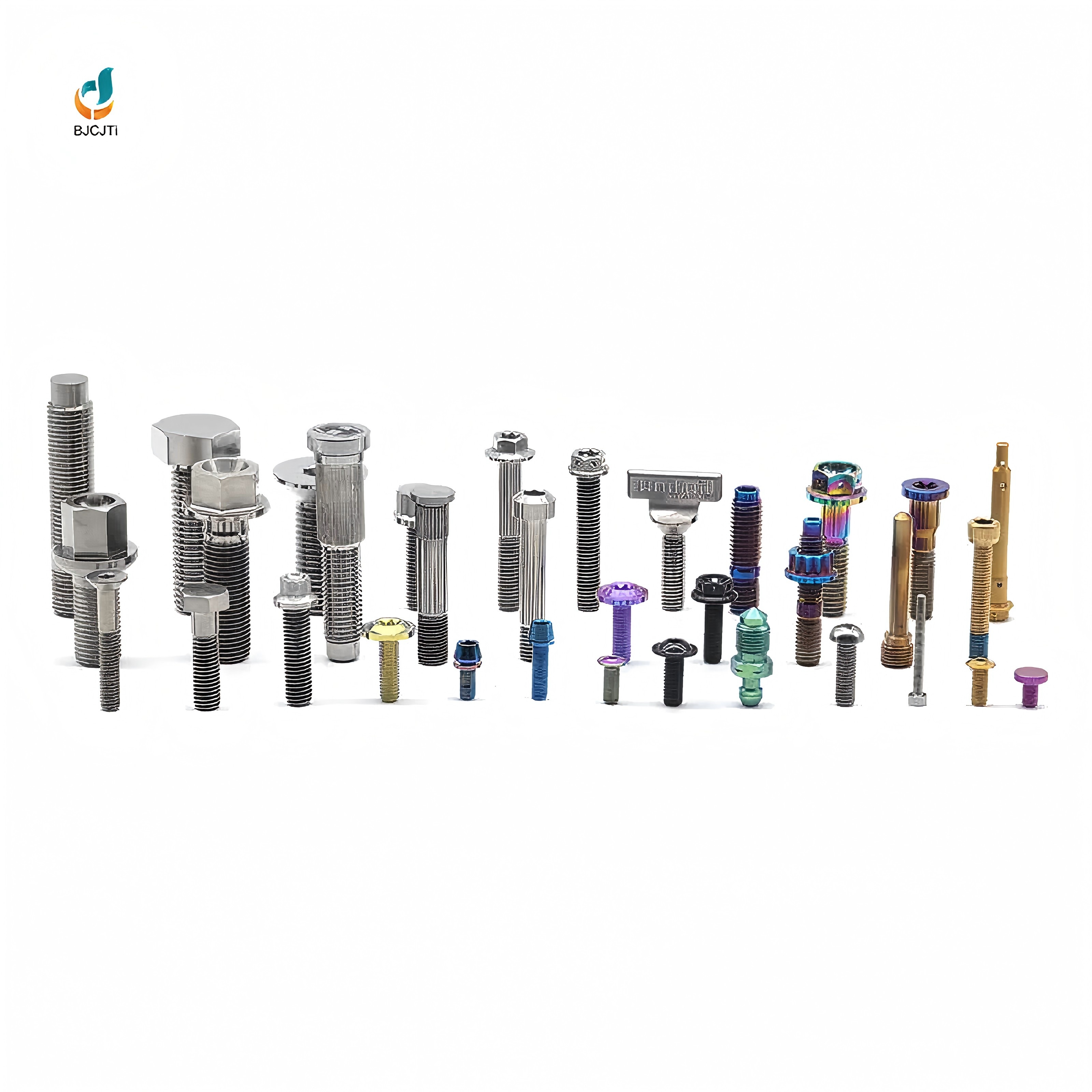
Titanium Screws Manufacturer - Chengjin
This broader adoption reflects a larger shift in industrial sourcing and engineering priorities. As manufacturers place greater emphasis on performance, service life, and reliability, titanium screws are being evaluated not only as premium fastening components, but also as practical solutions for applications where conventional materials may no longer meet technical requirements.
Titanium Screws Are Moving Beyond Niche Applications
The growing demand for titanium screws is closely linked to the material’s unique balance of properties. Titanium combines low density with high strength, while also offering excellent corrosion resistance, fatigue performance, and long-term stability. These characteristics make it well suited to fastening environments where weight, durability, and resistance to harsh conditions are all critical.
In many industries, the choice of fastening material directly affects system reliability and maintenance costs. Lightweight titanium fasteners can help reduce structural mass in transportation and aerospace systems, while corrosion-resistant titanium fasteners can improve service life in marine and chemical environments. In sectors that operate under strict performance standards, the ability of titanium to maintain mechanical integrity over time has become an increasingly important advantage.
Aerospace Continues to Set the Standard for High-Performance Fasteners
Aerospace remains one of the most significant markets for titanium fasteners. Aircraft structures, engine assemblies, landing systems, and avionics components all require fastening solutions capable of performing under vibration, cyclic stress, and changing thermal conditions. In these applications, weight reduction is a constant design priority, but it cannot come at the expense of structural reliability.
For this reason, aerospace titanium screws continue to be valued for their strength-to-weight ratio and long-term performance. Precision titanium fasteners are used where dimensional consistency, fatigue resistance, and reliable mechanical behavior are essential to safety and operating efficiency. As the aerospace supply chain continues to focus on efficiency, fuel savings, and reduced lifecycle maintenance, titanium fastening solutions are expected to remain an important part of future development.
Medical and Precision Manufacturing Are Expanding Demand
Medical applications are also contributing to the growth of the titanium screws market. In orthopedic, dental, and surgical fields, fastening components must meet requirements that extend beyond simple strength. Material compatibility, corrosion resistance, precision machining, and long-term stability all influence suitability for medical use.
Titanium is widely recognized for its biocompatibility, making it a preferred material in many implant-related and surgical applications. At the same time, rising demand for highly specialized devices is increasing interest in custom titanium screws and precision titanium fasteners designed for exact dimensions, specific thread requirements, and tight manufacturing tolerances.
A similar trend is visible in precision equipment and high-tech manufacturing, where standard hardware may not always match the design requirements of miniaturized or highly specialized components. In these sectors, custom titanium machine screws are increasingly used where exact fit and consistent performance are essential.
Industrial and Marine Sectors Are Driving Practical Adoption
Outside aerospace and medical fields, titanium screws are also gaining ground in industrial and marine applications where harsh operating environments create long-term challenges for standard fastening materials. Equipment exposed to seawater, aggressive chemicals, humidity, or outdoor weathering often requires fasteners that can maintain performance over extended periods without frequent replacement.
In these conditions, corrosion-resistant titanium fasteners offer clear operational benefits. Their resistance to oxidation and chemical attack can help reduce maintenance intervals, lower the risk of fastening failure, and support more stable long-term operation. For industrial users focused on total lifecycle value rather than initial purchase price alone, titanium screws are becoming a more attractive option in demanding service environments.
This shift is particularly relevant in offshore systems, energy equipment, marine hardware, chemical processing facilities, and other applications where downtime and component failure can carry significant operational costs.
Customization Is Becoming a Key Market Direction
As end-use requirements become more specialized, the titanium screws market is moving steadily toward customization. Standard fasteners continue to serve many applications, but a growing number of industries now require fastening solutions tailored to exact design and operating conditions.
Custom titanium screws are increasingly specified according to thread type, head style, dimensional tolerance, titanium grade, and surface treatment. In advanced engineering environments, fasteners are selected as part of a broader system design process rather than as interchangeable hardware items. Their performance must align with substrate materials, installation methods, structural loading conditions, and environmental exposure.
This is expanding demand for a wider range of product types, including titanium machine screws, titanium hex head screws, countersunk titanium screws, self-tapping titanium screws, and other application-specific variants. Manufacturers capable of supporting these specialized requirements are likely to be better positioned as technical standards continue to rise across multiple industries.
Supplier Capabilities Are Becoming More Important
As the market develops, buyers are placing greater emphasis on supplier capability as well as product availability. A competitive titanium screw manufacturer is increasingly expected to provide not only a broad product range, but also strong material knowledge, machining precision, process control, and an understanding of application-specific requirements.
This is particularly important in sectors where fastener quality must be verified through strict engineering and production standards. In aerospace, medical, and high-performance industrial manufacturing, consistency is often just as important as material selection. Product quality depends on the full manufacturing process, including raw material control, machining accuracy, inspection procedures, and the ability to meet demanding tolerances.
As a result, titanium fastener suppliers that can support both standard and custom projects are becoming more relevant to buyers seeking long-term supply reliability and technical support.
Application-Specific Demand Is Reshaping the Market
One of the most important developments in the titanium screws market is the growing influence of application-specific demand. Different industries do not evaluate fasteners in the same way. Aerospace programs may prioritize weight and fatigue resistance, medical manufacturers may focus on biocompatibility and precision, while marine and industrial users may place the highest value on corrosion resistance and long-term durability.
This means market growth is no longer driven only by material awareness. It is being shaped by the need for fastening solutions that match the technical realities of different end-use environments. Manufacturers that can align titanium fastener design with these requirements are likely to see stronger demand in a market that is becoming more specialized and performance-oriented.
Outlook for the Titanium Screws Market
The titanium screws market is evolving from a narrowly defined specialty segment into a broader category of high-performance fastening solutions. Demand is being supported by aerospace, medical technology, marine engineering, industrial equipment, and other sectors where long-term reliability and material performance are essential.
As engineering standards continue to rise, the role of titanium fasteners is expected to expand further, especially in applications that require reduced weight, corrosion resistance, and precise mechanical performance. At the same time, the market is likely to place increasing value on customization, manufacturing consistency, and supplier expertise.
Taken together, these trends indicate that titanium screws will remain an important area of development within the broader fasteners industry, with growing relevance across both established and emerging high-performance applications.
Baoji Chengjin Titanium Industry Co., LTD
Baoji Chengjin Titanium Industry Co., LTD
+86 150 9114 8496
jing@cj-titaniums.com
Visit us on social media:
LinkedIn
Facebook
YouTube
Legal Disclaimer:
EIN Presswire provides this news content "as is" without warranty of any kind. We do not accept any responsibility or liability for the accuracy, content, images, videos, licenses, completeness, legality, or reliability of the information contained in this article. If you have any complaints or copyright issues related to this article, kindly contact the author above.
