

Happy Horse 1.0 vs Seedance 2.0: A Practical Review of Two Very Different AI Video Directions
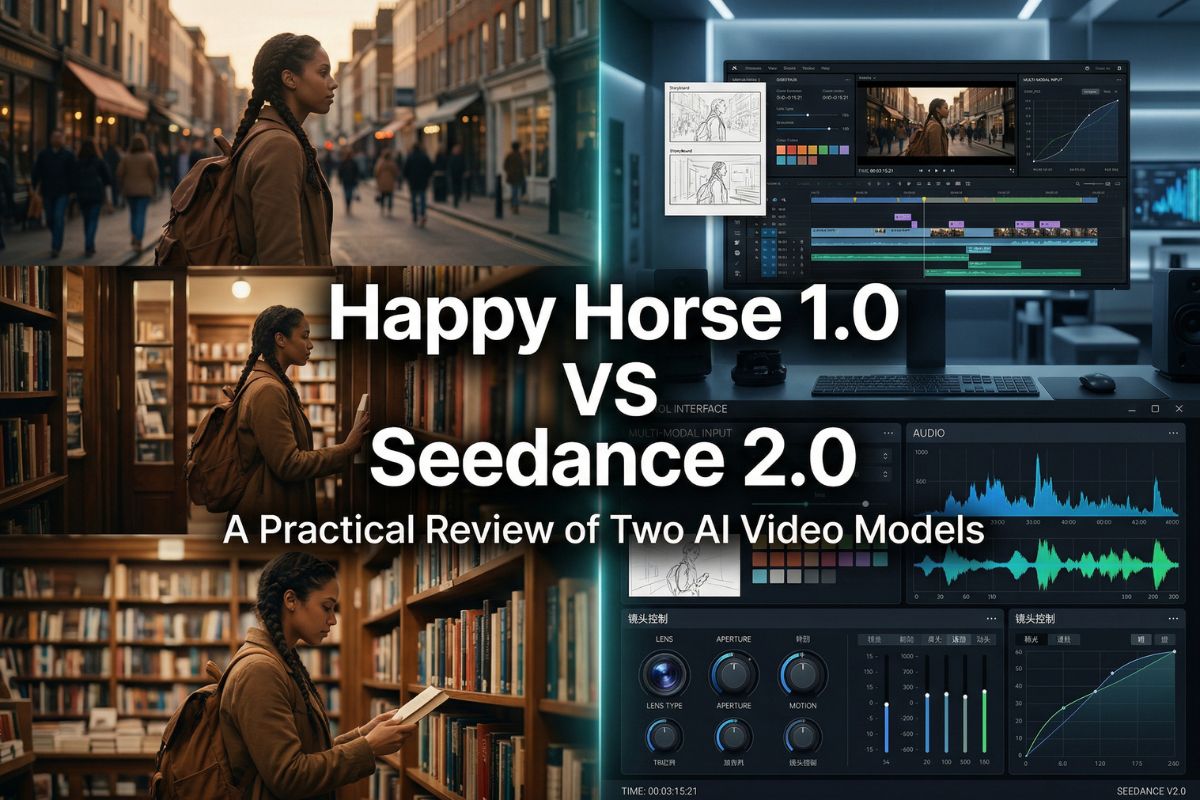
happy horse 1.0 VS Seedance 2.0

Reviewing Happy Horse 1.0
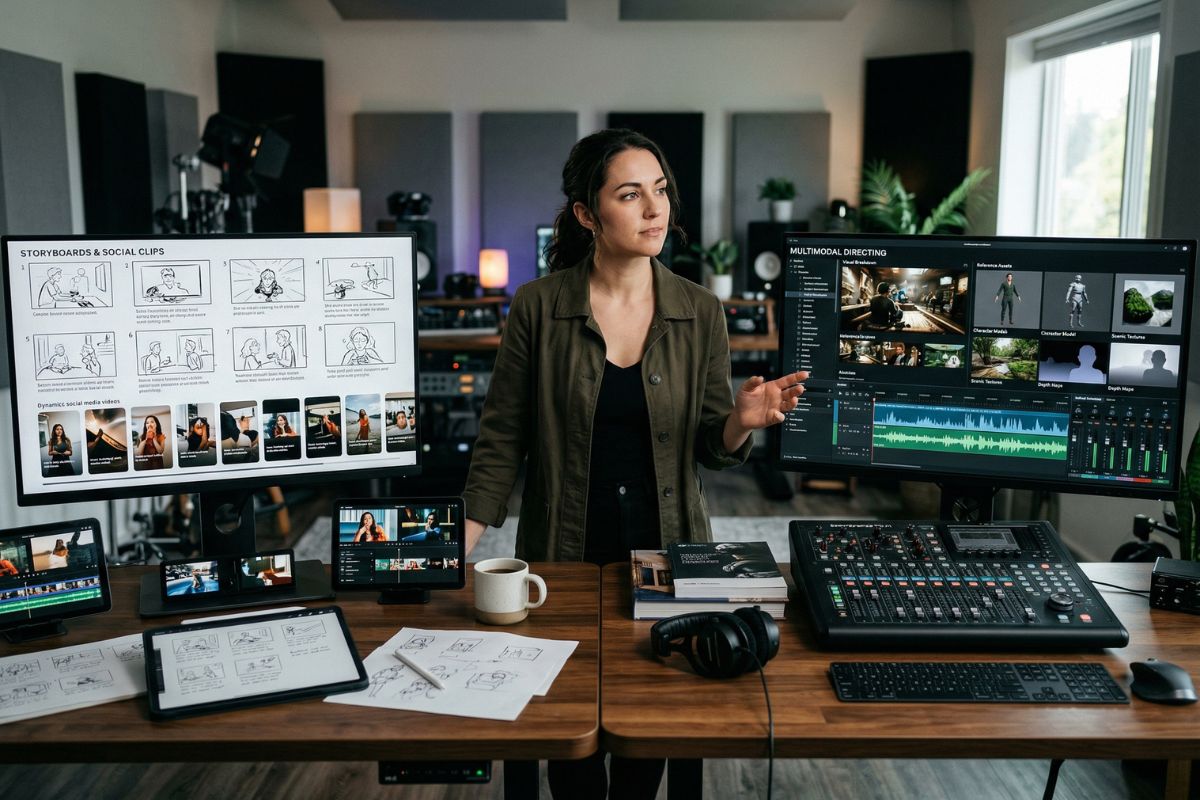
Which One Seems Better for Different Kinds of Users
Compare Happy Horse 1.0 and Seedance 2.0 across storytelling, multimodal control, audio support, and image-to-video workflow performance.
SHERIDAN, WY, UNITED STATES, April 13, 2026 /EINPresswire.com/ -- AI video has matured enough that model comparisons are no longer just about which clip looks more cinematic in isolation. What matters now is whether a model can hold a subject together across shots, respond to creative control without falling apart, and fit into an actual production workflow instead of staying at the demo stage. That is why a comparison like Happy Horse 1.0 vs Seedance 2.0 is worth doing carefully. Both models are attracting attention, both rank near the top of current public leaderboards, and both seem to represent a different idea of what “good” AI video should mean.What makes this comparison interesting is that the two models do not appear to be chasing exactly the same strength. Public positioning around Happy Horse 1.0 leans heavily toward multi-shot storytelling, character consistency, practical output settings, and image-to-video usability. Public positioning around Seedance 2.0 leans more toward multimodal input, audio-video joint generation, motion stability, and director-style control using reference materials. That difference may sound subtle at first, but in practice it shapes the kind of creative work each model is likely to handle better.
1. Why This Comparison Actually Matters
A year ago, a lot of AI video discussion was still driven by novelty. A model could earn attention with one beautiful clip, one dramatic camera move, or one visually polished scene. That phase is fading. Teams now want to know whether a model can survive repeated use, whether it behaves predictably under different prompts, and whether it reduces or increases revision time. Those questions matter more than isolated spectacle.
This is where Happy Horse 1.0 and Seedance 2.0 become useful to compare. They sit near the top of current Artificial Analysis rankings, but they do so with slightly different public stories around them. HappyHorse-1.0 currently leads Artificial Analysis in text-to-video with audio, text-to-video without audio, and image-to-video without audio, while Dreamina Seedance 2.0 720p is close behind in several categories and leads the current image-to-video ranking with audio. That split already hints that the models are not strongest in exactly the same situations.
So the real question is not “Which one wins?” The better question is this: what kind of workflow are you trying to build, and which model’s design priorities line up with it?
2. The Core Difference in One Sentence
If I had to reduce the comparison to one line, I would put it this way: Happy Horse 1.0 looks like a model built to make short sequences feel connected, while Seedance 2.0 looks like a model built to give creators more handles to control the result.
That distinction comes directly from how the two models are described publicly. The Happy Horse 1.0 page emphasizes multi-shot storytelling, consistent characters across cuts, image-to-video support, optional sound generation, and practical settings such as 720p and 1080p output, 5-, 10-, and 15-second durations, and 16:9, 9:16, and 1:1 aspect ratios. Seedance 2.0, by contrast, is introduced by ByteDance Seed as a unified multimodal audio-video model that supports text, image, audio, and video inputs, with director-level control over performance, lighting, shadow, and camera movement.
That is not just a difference in marketing language. It points to two different product instincts. One is trying to make generated sequences feel more coherent. The other is trying to make the creative process itself more steerable.
3. Reviewing Happy Horse 1.0: Where It Looks Strongest
The most interesting thing about Happy Horse 1.0 is that its public identity is not centered on one-shot beauty. It is centered on continuity. That matters because continuity is one of the hardest things for AI video to get right. Plenty of models can deliver a striking single shot. Far fewer can make the next shot feel like it belongs to the same scene, with the same subject, the same tone, and the same visual logic.
That is why the model’s emphasis on “consistent characters across cuts” stands out. The official page does not frame it as a general-purpose anything-goes video engine. It frames it as a model that is especially relevant for narrative clips, connected scenes, and character-led sequences. When a model leans that hard into continuity, it is usually responding to a real weakness in the category.
Its practical controls also deserve attention. On paper, 720p and 1080p, multiple aspect ratios, and short preset durations may not sound glamorous, but these are exactly the kinds of settings that make a model easier to use in real production. The difference between a fun toy and a usable tool often comes down to whether you can quickly generate a vertical promo, a square social asset, or a short landscape sequence without changing platforms or rebuilding the prompt logic from scratch. Happy Horse 1.0’s public setup suggests that usability has been taken seriously.
Another point in its favor is how well it appears to translate still images into motion. The official page explicitly highlights poster art, concept art, product shots, and character images as strong fits for its image-to-video workflow. That matters because many real teams are not starting from a blank text prompt. They are starting from an approved visual asset and trying to animate it while preserving the look. In that kind of pipeline, image stability matters just as much as motion style.
My main takeaway from Happy Horse 1.0 is this:
It looks strongest when a clip needs internal continuity.
It looks especially relevant for short narrative sequences.
It looks more production-friendly than “experimental” in the way it exposes settings.
It appears particularly convincing in no-audio text-to-video and no-audio image-to-video, where it currently leads Artificial Analysis.
That said, there is also a limit to the current public picture. A model can be very strong at connected short-form storytelling and still be less flexible in a deeply reference-driven workflow. That is exactly where Seedance 2.0 starts to feel different.
4. Reviewing Seedance 2.0: Why It Feels More Like a Control System
Seedance 2.0 is interesting because it is not being framed merely as a generator. It is being framed as a multimodal creative system. ByteDance Seed describes it as using a unified multimodal audio-video joint generation architecture with support for text, image, audio, and video inputs. The official materials also stress motion stability and “director-level control,” which is a strong signal about the kind of user the model is aimed at.
That director-style positioning becomes more concrete in the launch details. Seed says users can input up to 9 images, 3 video clips, 3 audio clips, plus natural-language instructions, and that the model can use those assets as references for composition, motion, camera movement, visual effects, and audio. This is not a minor feature bump. It suggests a workflow designed for creators who already have source materials and want to guide a result very precisely, rather than hoping a text prompt alone will do the job.
This is where Seedance 2.0 starts to feel less like a “best clip wins” model and more like a “best control surface” model. If your workflow includes multiple references, revision loops, and a need to steer performance or camera behavior, that public positioning matters a lot. It means the model is trying to solve a harder problem than raw generation quality alone. It is trying to solve direction.
Its audio story is also more central. Happy Horse 1.0 supports optional sound generation, which is useful. Seedance 2.0, however, is presented from the start as an audio-video joint model. That difference is important. In practice, a system built with audio as part of the core design may have a different ceiling in sound-aware creative workflows than a model where audio support is valuable but not the main identity of the product.
My review of Seedance 2.0 would look like this:
It appears especially strong when a project depends on multimodal references.
It seems better suited to workflows that involve deliberate steering and revision.
It treats audio as a first-class part of the creative setup.
It has a particularly strong argument in audio-aware image-to-video, where it currently leads Artificial Analysis.
The tradeoff is that more control does not automatically mean a cleaner or faster workflow for every user. Sometimes more inputs create more power. Sometimes they simply create more complexity.
5. Text-to-Video: Who Feels More Convincing Right Now?
In text-to-video, HappyHorse-1.0 currently leads Artificial Analysis in both with-audio and without-audio rankings, ahead of Dreamina Seedance 2.0 720p. That does not make it universally better, but it does show that blind human preference currently favors it more often in those public comparisons.
That ranking result lines up fairly well with each model’s public identity. Happy Horse 1.0 is easier to imagine as the stronger text-to-video pick when the goal is to generate a coherent short sequence from a prompt and get something that already feels edited, paced, and visually tied together. Seedance 2.0 is easier to imagine as the stronger pick when text prompt alone is not really enough, and the real creative value comes from adding reference assets and more explicit steering.
So in plain language:
For prompt-first generation, Happy Horse 1.0 currently looks more immediately persuasive.
For reference-heavy generation, Seedance 2.0 may become more interesting than its text-only ranking alone suggests.
That distinction matters because many users choose a model based on a benchmark headline, then get confused when the real workflow feels different. Benchmarks matter, but only when matched to the way the model is actually going to be used.
6. Image-to-Video: This Is Where the Gap Gets More Practical
If there is one area where this comparison becomes especially useful, it is image to video. That workflow matters because it reflects how a lot of commercial and creator work actually happens. Instead of inventing visuals from scratch, people animate campaign stills, product images, illustrations, portraits, concept frames, and poster-style assets into motion clips.
Publicly, Happy Horse 1.0 looks very comfortable in that lane. Its official page makes image-to-video a visible part of the product story, and Artificial Analysis currently ranks it first in image-to-video without audio. That suggests it is especially good when the job is to preserve the source look while adding natural movement and keeping the result visually coherent.
Seedance 2.0 becomes more compelling when the still image is only one piece of the brief. If the project also needs audio references, motion references, camera references, or more active direction, its multimodal architecture becomes a bigger advantage. That may explain why Dreamina Seedance 2.0 720p currently leads Artificial Analysis in image-to-video with audio, even while HappyHorse-1.0 leads the no-audio side.
This is one of the clearest insights from the comparison. Happy Horse 1.0 looks stronger for direct still-to-motion conversion when simplicity and coherence matter most. Seedance 2.0 looks stronger when the still image is only the starting point for a more directed multimodal composition.
7. What Each Model Seems to Prioritize
By this point, the contrast is fairly clear.
Happy Horse 1.0 appears to prioritize:
multi-shot continuity
character stability across cuts
practical short-form output settings
straightforward still-image animation
strong first-pass quality in public preference tests
Seedance 2.0 appears to prioritize:
mixed-modality input
audio-video joint generation
motion stability
director-style reference control
revision-friendly, steerable workflows
Neither priority set is automatically superior. They simply reflect two different beliefs about what creators need most.
8. Which One Seems Better for Different Kinds of Users?
For someone making short narrative clips, teaser scenes, stylized character sequences, or fast-moving social edits, Happy Horse 1.0 looks easier to justify right now. Its public configuration is simpler, its continuity pitch is clearer, and its leaderboard performance supports the idea that users consistently like the outputs.
For someone working more like a director or motion designer — someone who wants to feed in multiple images, previous clips, audio cues, and explicit control signals — Seedance 2.0 may be the more interesting model. Its appeal is not just output quality. Its appeal is how much of the creative process it tries to absorb.
If I were reducing it to practical recommendations, I would say:
Choose Happy Horse 1.0 when continuity, short-form storytelling, and quick still-to-motion generation matter most.
Choose Seedance 2.0 when control, reference depth, and audio-aware direction matter more than simplicity.
Test both if your work sits between those two poles, because that is where public rankings stop being enough.
9. Final Take
The most useful conclusion here is not that one of these models has “won.” It is that the category is becoming easier to read. Different models are starting to reveal clearer strengths, and that is a good thing for creators.
Happy Horse 1.0 currently looks like one of the strongest public options for connected short-form AI video, especially when continuity and first-pass coherence matter. Seedance 2.0 currently looks like one of the strongest public options for multimodal, audio-aware, reference-driven creation. Put together, they show two different directions the field is moving in: one toward smoother narrative generation, the other toward deeper creative control.
That is also why platforms such as GoEnhance AI are useful in this conversation. Not because they settle the debate, but because they make it easier to compare models through actual workflow use rather than abstract claims. And at this stage of AI video, workflow is where the real difference shows up.
Irwin
MewX LLC
+1 307-533-7137
email us here
Visit us on social media:
LinkedIn
YouTube
X
Legal Disclaimer:
EIN Presswire provides this news content "as is" without warranty of any kind. We do not accept any responsibility or liability for the accuracy, content, images, videos, licenses, completeness, legality, or reliability of the information contained in this article. If you have any complaints or copyright issues related to this article, kindly contact the author above.
