

Handicap Placards Without a Primary Care Doctor: HandicapMD Explains Online Evaluation Options
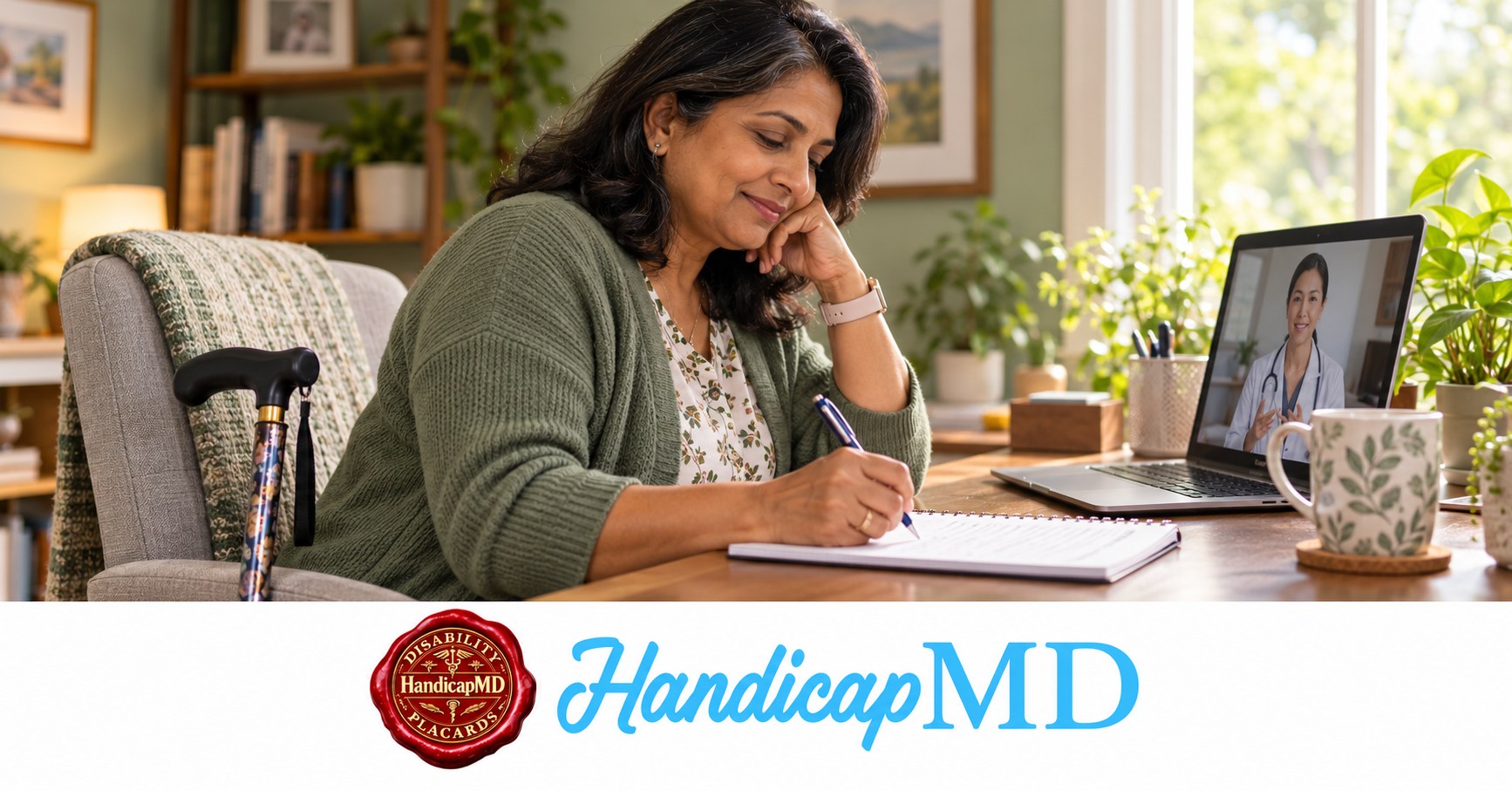

Resource helps people without a regular doctor prepare records, compare evaluation options, and understand state certification requirements.
The absence of a regular doctor should prompt a clear plan for evaluation and records. The medical decision still has to reflect the person and the state criteria.”
WASHINGTON, DC, UNITED STATES, October 30, 2026 /EINPresswire.com/ -- WASHINGTON, DISTRICT OF COLUMBIA — HandicapMD is highlighting a practical question for people who need disability parking information but do not have an established primary care doctor: where can an appropriate medical evaluation begin? Its new announcement introduces a guide to evaluation options, relevant records, and the separate roles of clinicians and government issuing offices.— Dr. Eric Jackson-Scott
Not having a regular doctor can complicate a form request without changing the underlying eligibility standard. A resident may have recently moved, lost access to a practice, relied on specialist care, or received treatment through several facilities. The task is to find an authorized professional who can assess the relevant limitation with enough information to make a responsible decision.
The handicap placard without a primary care doctor guide addresses that preparation. It does not suggest that applicants can bypass medical certification when their state requires it, and it does not promise that every online appointment can produce a signed parking form. The focus is on choosing a suitable next step and arriving with useful information.
Start with the care already received
A person without a primary care doctor may still have a treating professional who understands the condition affecting mobility. An orthopedic practice, rehabilitation clinician, cardiology office, or another specialist may hold relevant records. Whether that professional can certify a parking application depends on the state's accepted signer rules and the scope of the request.
Patients can begin by contacting the office that manages the condition rather than assuming they must establish an entirely new relationship first. A focused question helps: does the practice evaluate this limitation for disability parking documentation, and what appointment or records would it require? The office can explain its policy without being asked to guarantee a signature.
If the treating office cannot complete the request, patients can ask how to obtain relevant records and whether it recommends another appropriate evaluation route. A referral or records transfer can support continuity even when a different clinician ultimately considers the form.
Separate a new patient visit from a guaranteed result
Some people will need a new clinical assessment because the available information does not establish current function. Booking an appointment creates an opportunity for evaluation; it does not predetermine eligibility. A clinician may support certification, request additional evidence, recommend an in-person assessment, or conclude that the criteria are not met.
“The absence of a regular doctor should prompt a clear plan for evaluation and records,” said Dr. Eric Jackson-Scott. “The medical decision still has to reflect the person and the state's criteria.”
The guide encourages patients to ask about the purpose and scope of an appointment before paying for it. A general urgent care visit, a specialist follow-up, and a disability documentation evaluation may have different scheduling and documentation practices. Clarifying those differences can prevent an encounter that cannot address the actual request.
What telehealth can and cannot answer
Online evaluation may be an option in suitable circumstances, but remote access and certification authority are separate questions. The professional needs authority to practice where the patient is located, and the state parking program must recognize the relevant category of certifier. The clinician also needs enough information to evaluate the limitation responsibly.
Federal telehealth guidance explains that cross-state practice rules vary. Patients should identify their physical location for the appointment and ask whether the professional is authorized to see them there. A website's availability on a phone does not establish that any clinician can certify any state's application.
A remote encounter can also have clinical limits. If an examination, objective test, or direct observation is necessary, a video conversation may not be sufficient. Patients should be prepared for the possibility of additional assessment rather than treating a request for more information as an administrative obstacle.
Describe the problem before selecting the paperwork
People often begin with a search for a handicap placard online because a recent trip was difficult. The guide asks readers to translate that experience into a useful account: what condition or symptoms affect movement, what assistance is needed, and how the limitation changes ordinary travel between the vehicle and a destination.
For someone with variable symptoms, a description can include both typical days and more difficult episodes. The patient should be clear about frequency, duration, and what has been observed or documented. Selecting only the easiest day or exaggerating the worst episode can obscure the actual pattern a clinician needs to assess.
No one should perform an unsafe walking test for the sake of an application. Existing treatment instructions, prescribed assistive devices, and advice about exertion still apply. The evaluation can begin with a careful history and available records, followed by whatever additional assessment the professional considers appropriate.
Build a portable record summary
Without a single primary care office coordinating the history, a short summary can help connect information from different places. The patient can identify the condition being evaluated, the offices that treated it, major changes, current mobility aids, and relevant follow-up plans. Dates and the names of treating practices make records easier to locate.
The summary should distinguish personal observations from a professional's findings. Saying that a therapist documented use of a walker is different from saying that the patient believes a walker might help. Both can be discussed, but they represent different kinds of information and should not be presented interchangeably.
Records should be current enough to answer the relevant question. A diagnosis from several years ago may establish history without explaining today's functional limitation. A recent assessment, discharge instruction, or treatment note may provide the missing context. The evaluating office should determine which materials are needed.
Request documents through the right channel
Patients can ask a treating facility how to obtain visit summaries or other relevant records, including through a patient portal where available. They should confirm that downloaded documents include identifying information, dates, and the relevant findings rather than relying on a cropped screenshot with unclear context.
When several facilities are involved, organizing documents by date can reveal gaps before the appointment. A patient may have an emergency department summary but not a later specialist note that changed the restrictions. Identifying that difference early lets the patient request the more relevant material.
Medical information should be sent using the evaluating office's designated secure process. Public reviews, social media messages, and general comment fields are inappropriate places for detailed records. A caregiver helping with downloads should have the patient's permission and follow any applicable authorization requirements.
Check the signer rule for the actual state
Different jurisdictions allow different professionals to certify disability parking requests. Some identify physicians, advanced practice clinicians, or other practitioners; some limit certification by the condition involved. A person accepted for one medical category or state may not be authorized for another.
That makes the current official form an important part of appointment preparation. Patients can share the complete form and its instructions with the office so the professional can review the certification being requested. An unofficial checklist should never replace the criteria printed by the issuing authority.
Applicants should also identify whether the situation truly requires new medical certification. Replacing a lost credential, updating an address, and completing a routine renewal may follow administrative procedures that differ from an original application. A missing primary care relationship should not lead someone to purchase an evaluation for a transaction that does not require one.
Ask practical questions before scheduling
The resource encourages readers to ask whether the office handles the relevant state form, which records it needs, how the appointment is conducted, and what happens if more information is necessary. Patients can also clarify how any supported certification is delivered and which steps remain their own responsibility.
Cost questions deserve the same clarity. A clinical evaluation fee and a government placard fee pay for different things. Paying one does not automatically cover the other, and a free government credential does not mean every private medical appointment is free. Insurance and payment arrangements should be confirmed with the relevant provider.
For a person who needs language assistance, an accessible communication format, or help arranging the appointment, those needs can be raised at scheduling. Early discussion gives the office a chance to explain available arrangements. It also helps the patient participate directly in a conversation about their own limitations.
From clinical decision to issued credential
If certification is supported, the completed document must still be submitted through the correct government process. The responsible office may be a motor vehicle agency, county office, local government, or another authority. The applicant should check the current destination and accepted submission method for the requested credential.
A signed medical section does not turn the application into a parking permit. Applicants should wait for the issued credential and follow its display and use instructions. An appointment confirmation, downloadable receipt, or photograph of a doctor's form does not substitute for the official product.
Keeping copies and a simple timeline can help with follow-up. The patient can record when records were requested, when the assessment occurred, when the application was sent, and whether any correction was requested. That timeline can identify the next action without treating every delay as a medical problem.
A realistic route for fragmented care
Keep the documentation request connected to ongoing care
A parking evaluation addresses a specific certification question. It should not be treated as a substitute for managing an ongoing condition or establishing broader care when that is needed. Patients can ask the evaluating clinician which findings should be shared with another treating professional and what follow-up is appropriate. Any transfer should follow the patient's permissions and the offices' procedures.
For someone between practices, a small appointment folder can prevent important details from being lost. It can contain a current medication list if requested, contact information for prior treating offices, relevant records, the official application, and the questions the patient wants answered. The folder should make the history easier to understand without suggesting that the patient has already reached the medical conclusion.
Communication after the visit matters as well. Patients can ask who will respond if the government requests clarification about the professional's portion, and how they should report an error in personal information. Knowing those contacts can reduce the temptation to alter a document or begin another paid appointment unnecessarily. It also gives a caregiver a defined administrative role while preserving clinical responsibility with the evaluating professional and credential decisions with the issuing authority.
Consider a fictional resident who recently moved and has ongoing mobility limitations documented by a former specialist. The person can request the relevant records, check the new state's certifier rules, and ask an appropriate local or authorized remote clinician about an evaluation. This preparation supports a decision without assuming the prior diagnosis automatically settles the application.
Another resident may discover that an existing placard only needs administrative replacement. In that situation, the useful next step may be contacting the issuer rather than finding a new doctor. The guide is designed to help readers recognize these different pathways before committing time and money.
HandicapMD also directs readers to the national handicap parking eligibility guide for a starting comparison of state requirements. The absence of a regular doctor is a planning challenge; it does not change who issues credentials, replace medical judgment, or create a universal online approval route. An organized, accurate, current history and a suitable individualized evaluation remain the foundation of a responsible request.
About HandicapMD
HandicapMD provides online medical evaluations related to disability parking certification. When supported by the clinical assessment and applicable requirements, a licensed clinician completes the medical portion of the relevant application. The company's educational resources explain state processes and help residents prepare questions. Government agencies retain responsibility for reviewing applications and issuing parking credentials.
https://www.handicapmd.com/
Crystal Dennon
HandicapMD
help@handicapmd.com
Visit us on social media:
Instagram
Facebook
YouTube
Skip the Doctor's Office Line with HandicapMD
Legal Disclaimer:
EIN Presswire provides this news content "as is" without warranty of any kind. We do not accept any responsibility or liability for the accuracy, content, images, videos, licenses, completeness, legality, or reliability of the information contained in this article. If you have any complaints or copyright issues related to this article, kindly contact the author above.
