

Top Siemens PLC Manufacturer Supports Industrial Automation With Integrated Solutions
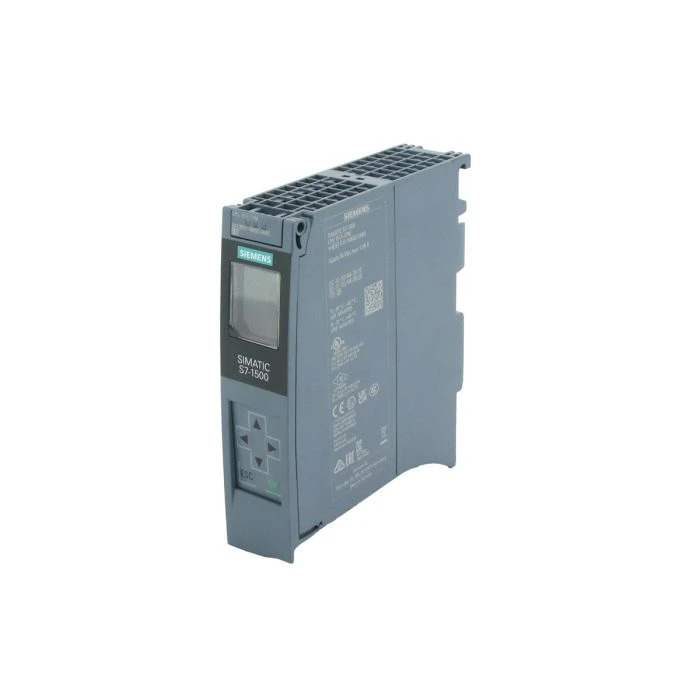
SIEMENS 6ES7511-1AK02-0AB0
SHENZHEN, GUANGDONG, CHINA, October 29, 2026 /EINPresswire.com/ --
Shenzhen Liyu Intelligent Technology Co., Ltd. is an industrial automation supplier serving customers seeking programmable logic controllers (PLCs), human-machine interface (HMI) equipment, variable frequency drives, and related automation components. As manufacturers across industries continue to modernize production lines and improve equipment control, the demand for compatible automation products and dependable sourcing channels remains important. With a publicly listed portfolio covering products from multiple industrial automation brands, the company positions itself as a sourcing partner for businesses looking to obtain control systems, operator interfaces, and drive components for industrial applications.
Industrial automation has become an essential part of manufacturing, packaging, material handling, utilities, and process industries. Production facilities rely on control systems to coordinate machines, monitor operating conditions, and respond to changes in production requirements. PLCs are a central component of many of these systems, receiving input signals from sensors and devices, processing programmed logic, and sending commands to outputs such as motors, valves, and actuators. Their flexibility allows engineers to adapt machine behavior to different production tasks without redesigning the entire electrical control system.
Siemens is a well-established supplier of industrial automation technology, with product families covering PLCs, HMI panels, industrial networking, motion control, and drives. Within this ecosystem, a PLC typically manages control logic, an HMI provides a visual interface for operators, and a variable frequency drive adjusts the speed and torque of a compatible motor. Although these products can work together in an automation system, each performs a distinct function and must be selected according to the requirements of the application.
Shenzhen Liyu Intelligent Technology Co., Ltd. lists Siemens automation products among the brands and product categories available through its business. Its website describes the company as a provider of automation products, related accessories, and Industry 4.0 solutions, and states that it works with more than 129 well-known brands worldwide. For industrial buyers, access to products across several brands can be useful when sourcing components for equipment maintenance, system upgrades, and new automation projects. Product availability and the exact models offered should be confirmed directly with the supplier.
PLCs remain important in industrial control because they are designed to operate reliably in environments where machines must perform repetitive tasks with predictable timing. A PLC system may manage conveyor sequences, packaging cycles, machine interlocks, temperature-related processes, or the coordination of several devices. Depending on the selected platform, the system can also communicate with HMIs, drives, remote input/output modules, and supervisory control software.
When sourcing Siemens PLC equipment, buyers commonly need to identify the correct product family, CPU model, memory capacity, input/output requirements, communication interfaces, and programming environment. Compatibility with existing hardware is especially important when replacing an older controller. Even products that appear similar may differ in firmware support, communication options, expansion capacity, or engineering software requirements. Procurement teams should therefore confirm the complete part number and system compatibility before ordering.
The role of a supplier extends beyond identifying a product by brand name. Industrial buyers may need help locating a specific model, checking whether accessories are required, confirming availability, and coordinating delivery. For maintenance teams, a replacement component may need to match an existing installation closely to avoid unnecessary engineering work. For system integrators, accurate model information can help ensure that the controller, interface, and drive components are compatible with the planned design.
Human-machine interfaces provide the connection between operators and automated equipment. Through an HMI, operators can view machine status, acknowledge alarms, adjust authorized settings, monitor process values, and select operating modes. Depending on the application, an HMI may be a compact panel mounted on a machine or a larger touchscreen installed at a control station. The interface design can influence how easily personnel understand equipment conditions and respond to abnormal events.
Shenzhen Liyu Intelligent Technology Co., Ltd. lists Siemens HMI products within its automation-related offerings. Siemens HMI equipment includes different panel types and product families designed for various control and monitoring requirements. Selection depends on screen size, resolution, communication interfaces, mounting requirements, environmental conditions, and compatibility with the PLC and engineering software. Buyers should also confirm whether the requested panel is a current model, a replacement for an older unit, or a component intended for a legacy installation.
The value of an HMI depends partly on how it is configured for the application. A well-planned interface can organize operating information into understandable screens, present alarms clearly, and help authorized personnel navigate machine functions. In contrast, an interface that does not match the control architecture can complicate commissioning and maintenance. For projects involving Siemens HMI equipment, system integrators should verify the required software version, communication settings, project transfer method, and compatibility with the selected controller.
HMI procurement can also involve practical considerations such as screen protection, mounting cutouts, replacement availability, and environmental ratings. Equipment used in dusty, wet, or temperature-variable locations may require a suitable enclosure or a panel designed for those conditions. The correct model should be selected according to the actual installation environment rather than screen size alone. These details are particularly relevant when purchasing replacement equipment for existing production lines.
Variable frequency drives are another important component in many automation systems. A VFD controls the speed of an AC motor by adjusting the frequency and voltage supplied to it within the drive’s operating limits. In suitable applications, variable-speed operation can improve process control, reduce mechanical stress during starting, and help match motor output to changing load requirements. Common uses include pumps, fans, conveyors, mixers, and other machinery where controlled motor speed is beneficial.
Shenzhen Liyu Intelligent Technology Co., Ltd. also lists Siemens VFD products in its product portfolio. Siemens drive products are available in different families and power ranges, with capabilities that vary by model. Selecting a drive requires attention to motor power, rated current, voltage, overload requirements, control method, communication protocols, braking requirements, and the operating environment. A drive that is incorrectly sized or configured may fail to meet the application’s performance or protection requirements.
For buyers replacing an existing VFD, the original drive’s full model number and application details can help narrow the selection. However, a direct model replacement should not be assumed to be a plug-and-play exchange. Wiring arrangements, motor data, parameter settings, communication configuration, and control logic may need to be reviewed. Where a drive is part of a safety-related or tightly integrated control system, the replacement should be assessed by a qualified engineer before commissioning.
PLC, HMI, and VFD equipment often operate as parts of a coordinated system. The PLC executes control logic, the HMI displays operating information and accepts operator commands, and the drive controls motor operation. Communication between these components can use industrial protocols supported by the selected models. The exact architecture depends on the project, so compatibility must be established from technical documentation rather than assumed from the brand name alone.
For example, a conveyor installation may use a PLC to control start and stop sequences, an HMI to display operating status and fault messages, and a VFD to regulate belt speed. In a pumping system, the controller may coordinate operating conditions while the drive adjusts motor speed according to the process requirements. These examples illustrate how the three categories can contribute to automation, although the final design must account for the equipment, process conditions, and relevant safety requirements.
The sourcing of automation components is increasingly connected to equipment lifecycle management. Factories may need new products for expansion, replacement parts to reduce downtime, or compatible components for gradual system upgrades. In each case, buyers benefit from maintaining accurate records of part numbers, firmware versions, wiring diagrams, configuration files, and installation dates. Such records can simplify future procurement and help technical teams evaluate whether a proposed replacement is suitable.
Shenzhen Liyu Intelligent Technology Co., Ltd. states that it offers automation products and related accessories and emphasizes its professional customer service, technical support, sourcing, and follow-up teams. Its website also references international shipping methods including UPS, DHL, FedEx, EMS, and SF Express. These company-described services may be relevant to buyers coordinating orders across borders, though shipping availability, delivery time, product origin, and warranty arrangements should be confirmed for each transaction.
Product authenticity and traceability are particularly important when sourcing branded industrial automation equipment. Buyers may request clear product photographs, complete model numbers, packaging information, serial-number details where applicable, and documentation supporting the product’s origin and condition. For critical production equipment, procurement teams should establish whether the item is new, unused, refurbished, or otherwise supplied under a particular condition. The supplier’s sales terms and warranty coverage should also be reviewed before purchase.
Industrial automation buyers may also face different requirements depending on whether they are machine builders, maintenance contractors, distributors, or end users. Machine builders may prioritize design compatibility and engineering documentation. Maintenance teams may focus on the speed of replacement and minimizing downtime. Distributors may need product availability and repeatable ordering processes, while end users may require technical guidance for a particular application. A supplier that can respond clearly to these different requirements can support a more organized procurement process.
As production facilities continue to evaluate automation upgrades, Siemens PLCs, Siemens HMI equipment, and Siemens VFDs remain distinct categories that can contribute to machine control, operator monitoring, and motor management. Their suitability depends on the technical needs of the installation, the control architecture, and the requirements of the operating environment. Buyers should evaluate each component individually while also checking how it fits into the complete system.
Against this background, Shenzhen Liyu Intelligent Technology Co., Ltd. presents itself as a sourcing partner for industrial automation products from multiple brands, including Siemens-related equipment. Its publicly described business includes automation components, accessories, and Industry 4.0 solutions. For companies evaluating the supplier, the next steps are to confirm the exact product models, availability, condition, technical compatibility, documentation, and delivery terms before placing an order.
About Shenzhen Liyu Intelligent Technology Co., Ltd.
Shenzhen Liyu Intelligent Technology Co., Ltd. is a China-based industrial automation supplier located in Shenzhen, Guangdong Province. According to its public website, the company provides a range of automation products, related accessories, and Industry 4.0 solutions. Its listed offerings cover products from multiple industrial automation brands, including Siemens equipment used in programmable control, operator interfaces, and motor-drive applications.
The company’s published information describes customer service, technical support, sourcing, and order follow-up capabilities for business customers. Its website also provides contact information for product enquiries and describes international shipping options. Buyers seeking Siemens PLC products, Siemens HMI, Siemens VFD, or related automation components should confirm current availability, exact model numbers, product condition, compatibility, warranty coverage, and delivery arrangements directly with the company.
For additional information about its product portfolio and services, visit www.szlyzn.com.
Address: Room 10H-X59, Shenmao Commercial Center, Futian District, Shenzhen, China
Official Website: https://www.szlyzn.com/
Tian
Shenzhen Liyu Intelligent Technology Co., Ltd.
contact@szlyzn.com
Legal Disclaimer:
EIN Presswire provides this news content "as is" without warranty of any kind. We do not accept any responsibility or liability for the accuracy, content, images, videos, licenses, completeness, legality, or reliability of the information contained in this article. If you have any complaints or copyright issues related to this article, kindly contact the author above.
